
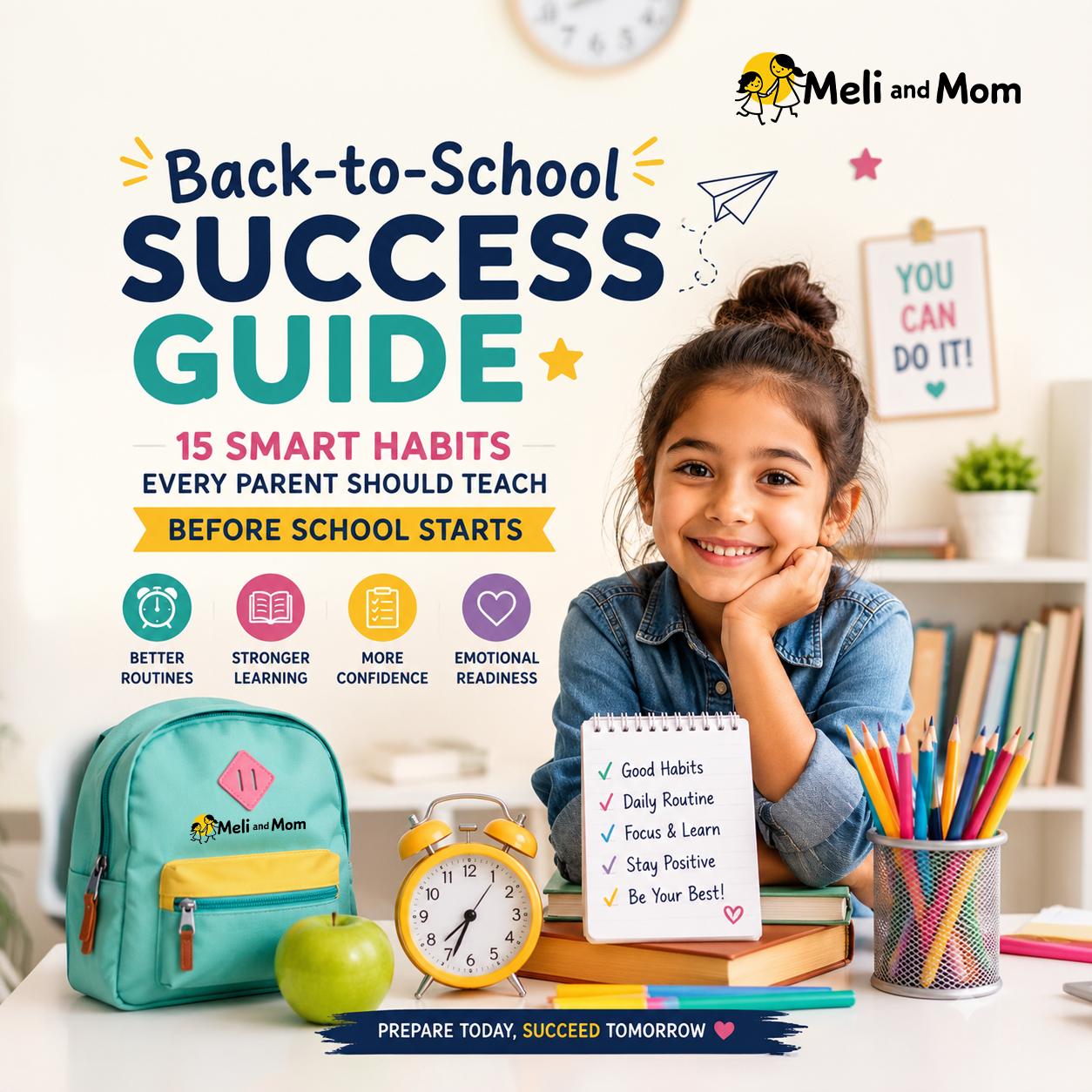
5 Smart Habits Every Parent Should Teach Before School Starts
Introduction
Buying school supplies is only one part of preparing for a new academic year. The real foundation for a successful school year starts with habits, routines, confidence, and emotional readiness.
Many parents spend hours choosing the right backpack, lunch box, and stationery, but often overlook the daily habits that help children stay organized, focused, and happy throughout the year.
This guide shares practical strategies every family can use to help children start the school year with confidence and build habits that support long-term success.
Why Preparation Matters More Than Supplies
A child with perfect school supplies but poor routines may struggle throughout the year.
A child with simple supplies but strong habits often performs better academically and emotionally.
The goal is not perfection. The goal is consistency.
Benefits of early preparation:
- Reduces first-day anxiety
- Improves confidence
- Creates smoother morning routines
- Encourages responsibility
- Helps children adapt faster to school expectations
1. Reset Sleep Schedules Early
One of the biggest challenges after holidays is adjusting to school timing.
Start shifting bedtime and wake-up time at least two weeks before school begins.
Tips:
- Move bedtime earlier by 15–20 minutes every few days
- Limit screen time before bed
- Create a calming bedtime routine
- Encourage reading before sleep
A well-rested child learns better and stays focused longer.
2. Create a Daily Routine Chart
Children thrive when they know what to expect.
A simple visual routine chart can help younger children manage daily tasks independently.
Include:
- Wake up
- Brush teeth
- Get dressed
- Eat breakfast
- Pack school bag
- Homework time
- Reading time
- Bedtime
Consistency reduces daily stress for both parents and children.
3. Encourage Reading Every Day
Reading is one of the most powerful habits for academic growth.
Even 15–20 minutes of daily reading can improve:
- Vocabulary
- Concentration
- Creativity
- Communication skills
Allow children to choose books that match their interests.
Reading should feel enjoyable, not like another assignment.
4. Teach Basic Organization Skills
Organization is a life skill that helps children far beyond school.
Teach children how to:
- Keep school materials in one place
- Arrange books by subject
- Use folders properly
- Pack their school bag each evening
- Check supplies regularly
Small habits prevent last-minute panic.
5. Build Responsibility Through Simple Tasks
Children gain confidence when they are trusted with responsibilities.
Examples:
- Packing their lunch box
- Filling their water bottle
- Organizing stationery
- Preparing their uniform
- Setting their study table
Responsibility creates independence.
6. Prepare a Dedicated Study Space
Children concentrate better when they have a consistent learning environment.
A study area should be:
- Clean
- Quiet
- Well-lit
- Comfortable
- Free from distractions
It doesn't need to be expensive.
A small, organized corner works perfectly.
7. Develop Healthy Screen Habits
Technology is useful, but balance is important.
Set clear expectations before school begins.
Consider:
- Fixed screen time limits
- Screen-free meals
- No devices before bedtime
- Educational content whenever possible
Healthy boundaries improve focus and behavior.
8. Practice Positive Communication
Many children feel nervous before a new school year.
Talk openly about:
- New teachers
- New classmates
- New routines
- School expectations
Listen carefully to their concerns.
Sometimes children need understanding more than solutions.
9. Encourage Goal Setting
Simple goals help children stay motivated.
Examples:
- Read one book each month
- Complete homework on time
- Improve handwriting
- Participate in school activities
Celebrate effort, not just results.
Progress builds confidence.
10. Prepare for Healthy Lunches and Snacks
Nutrition directly affects energy and concentration.
Plan simple options that children enjoy eating.
Ideas:
- Fruits
- Sandwiches
- Homemade snacks
- Nuts (if school policies allow)
- Healthy wraps
Preparation saves time during busy school mornings.
11. Teach Time Management
Children can begin learning time management at any age.
Help them:
- Estimate how long tasks take
- Prioritize homework
- Follow a schedule
- Avoid rushing at the last minute
These skills become increasingly important in higher grades.
12. Build Confidence Before Day One
Confidence grows through preparation.
Help children feel ready by:
- Visiting the school if possible
- Meeting friends beforehand
- Practicing morning routines
- Discussing positive expectations
Children often mirror their parents' confidence.
13. Focus on Emotional Readiness
Academic success and emotional well-being go hand in hand.
Teach children:
- How to handle mistakes
- How to ask for help
- How to make friends
- How to manage frustration
Emotional skills support lifelong learning.
14. Celebrate Small Wins
Success isn't only about grades.
Recognize achievements such as:
- Completing homework independently
- Reading regularly
- Being responsible
- Showing kindness
- Staying organized
Small victories create long-term motivation.
15. Start the Year with a Positive Family Mindset
School is a partnership between parents, teachers, and children.
Approach the new academic year as an exciting opportunity rather than a stressful challenge.
A positive family environment helps children develop confidence, resilience, and enthusiasm for learning.
Key Takeaways
✔ Prepare habits before school starts
✔ Focus on routines, not perfection
✔ Encourage responsibility and independence
✔ Create healthy sleep and study habits
✔ Support emotional readiness
✔ Celebrate effort and progress
✔ Build confidence one step at a time
When children develop strong habits early, the entire school year becomes smoother, more productive, and far more enjoyable for everyone.